
Blog
Here are a selection of JP’s blogs on a variety of interesting topics.
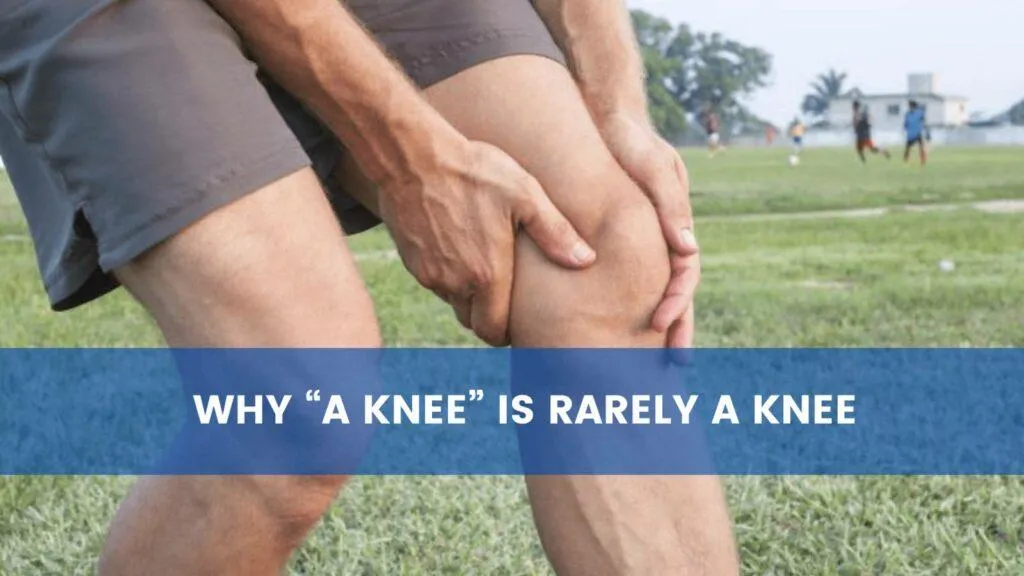
Why “a knee” is rarely a knee
Some Next Level thoughts and reflections…
It always baffled me before I got into movement as an occupation, why people with “bad knees” took up cycling. They have a ‘knee problem’, and their solution is to take up a sport that involves putting MORE force through the knees! Why, I asked these earnest looking people, would you do that? “Because it doesn’t hurt my knees of course!” was the reply. “Ermmmm…okay…soooo, you don’t have a knee problem then?” was my follow up question. “Of course I do! It hurts to run or play sport, all the time!” Now they’re getting frustrated. Confused, I stopped asking questions. There had to be more.
To be clear, sometimes, as Freud said “a cigar is just a cigar”, ie a knee, really is a knee, but usually, it’s something else. What do I mean? Well, I’m talking about knee dysfunction and pain, or any uncomfortable area of the body for that matter – neck, shoulders, low back, the list goes on. In my work as a movement consultant, positive change in my clients has gone through the roof these last few years, when I looked beyond the symptom being presented. The catalyst was connecting with the work of Prof Stephen Levin, Thomas Myers, Ian O’Dwyer, Michol Dalcourt and a number of other incredible teachers and mentors.
These individuals changed the game for me (and around 1,000 clients and 100s of students of my programs) when it comes to understanding human anatomy and authentic human movement, in my humble opinion. If you’ll let me outline their work, then we can get back to those pesky knees!
Tensegrity
‘Tensegrity’, is a conflation of the words ‘tensional integrity’, used to describe models like you see in the picture. Continuous tension holds the components in a shape and structure, not the pieces of wood, or ‘solid’ items, but the elastic matrix of tension. Prof Levin coined the term biotensegrity, to describe us mammals as a system. In other words, our bones aren’t the ‘structure’ of our body, but are, as Michol Dalcourt would say, “swimming in constant tension”. That constant tension is provided by our muscles and connective tissues. These are, in effect, our elastic.

I described the tensegrity / biotensegrity link HERE in this video (2:50) if you’d like to know more.